Samagra Yoga Chikitsa
Comprehensive Yoga Healing Course

with Acharya Harilal & Meera Karanath
Arsha Yoga Gurukulam Charitable Trust

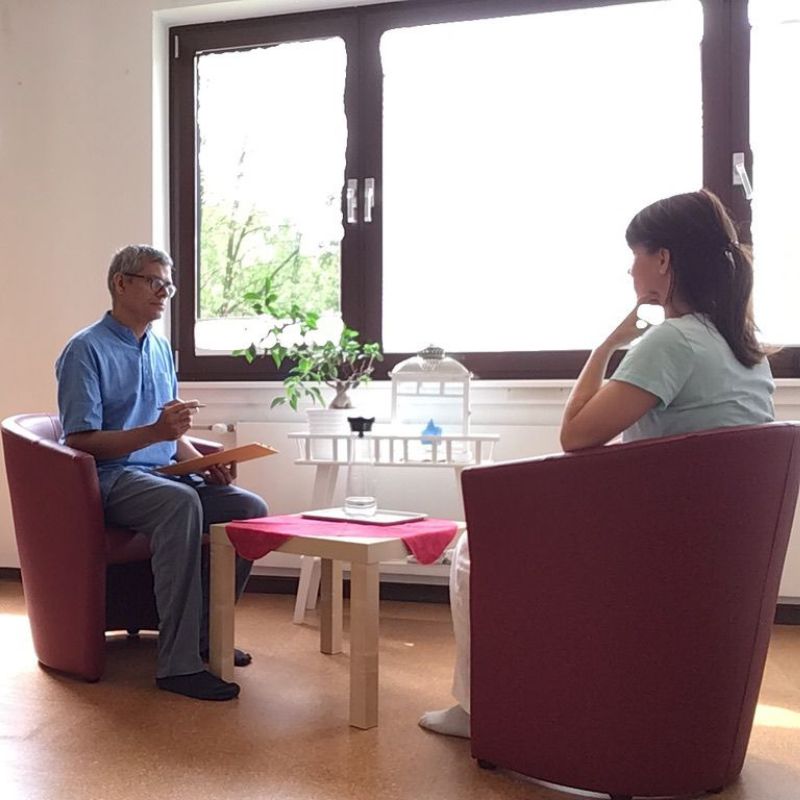
Samagra Yoga Chikitsa brings yoga back to its original form: individual guidance rooted in the gurukula system. The course trains you to work with students one-to-one, based on their physical, mental and emotional needs. Every person carries a unique combination of body patterns, lifestyle pressures, impressions and experiences. Yoga therapy addresses these layers through the model of Pancha Kosha, the five-sheath structure of human existence.

This four-week residential training gives you a practical and theoretical foundation in therapeutic yoga, including consultation skills, assessment methods, cleansing techniques and specialised practices drawn from classical yoga.

Internationally Recognised Certificate

On completing the Samagra Yoga Chikitsa Course, you receive certification from Sivananda Yoga Vedanta Dhanwantari Ashram. This specialised 200-hour training is recognised internationally and affirms your competence in applying classical yogic tools to support recovery from psychosomatic conditions such as stress-related disorders, anxiety, digestive imbalance and chronic pain.

Why Samagra Yoga Chikitsa?

Group classes help many students, but deeper change requires an individual approach. Health shifts with age, habits, stress, work demands and unresolved patterns of the mind. Yoga therapy takes these factors into account. The aim is to restore clarity and balance rather than add more techniques. Many conditions arise from adhi (distress) before they manifest as vyadhi (disease). This course teaches you how to address both levels. You don’t need to change your environment to feel whole. You change your approach to yourself. Yoga therapy works through this principle of “unlearning”: dropping habits that cover the sense of inner completeness.

Holistic Understanding

Study the human system through the yogic lens. Learn how breath, movement, diet, and thought shape well-being. Gain insight into the five sheaths of existence and how imbalance begins and resolves within them.

Applied Practical Learning

Go beyond theory with direct practice. Observe how yogic tools can bring harmony to real-life situations. Small group work and guided sessions help bridge knowledge with hands-on experience.

Personal Transformation

Use the teachings to refine your own awareness and stability. Daily discipline, reflection, and satsang create the inner space where genuine healing begins, bringing peace to both teacher and seeker.

Curriculum

The course covers the key components needed to guide students safely and effectively.

Understanding the Human System

Study the human body and mind through yogic and Vedantic perspectives. Learn how stress, thought, and energy influence health and inner balance.

Yogic Approach to Healing

Discover how postures, breath, diet, and relaxation awaken the body’s natural intelligence, restoring balance and vitality across physical and mental layers.

Managing Psychosomatic Conditions

Recognise how anxiety, tension, and fatigue arise in the body-mind, and learn to ease them using classical yogic practices for awareness and restoration.

Practice
118 hrs

Therapeutic application of asana, pranayama, meditation, mantra, kriya

Theory
48 hrs

Four paths of yoga in therapy, Pancha Kosha Tattwa, adhi, adhija vyadhi

Specific Yoga Therapy Practices
48 hrs

Special Techniques
24 hrs

Cyclic relaxation, prana channeling

Anatomy & Physiology
6 hrs

Functional anatomy (Paul Grilley method)

Guest Lectures
8 hrs

Ayurveda, Naturopathy

Self-Study
80 hrs (non-contact)

Karma yoga, revision

Additional Information
  • Comprehensive yoga therapy principles
  • Pancha Kosha Tattwa: the five-sheath model
  • Adhi and Adhija Vyadhi (distress and psychosomatic disease)
  • Svastha Vrittam (Ayurvedic prevention)
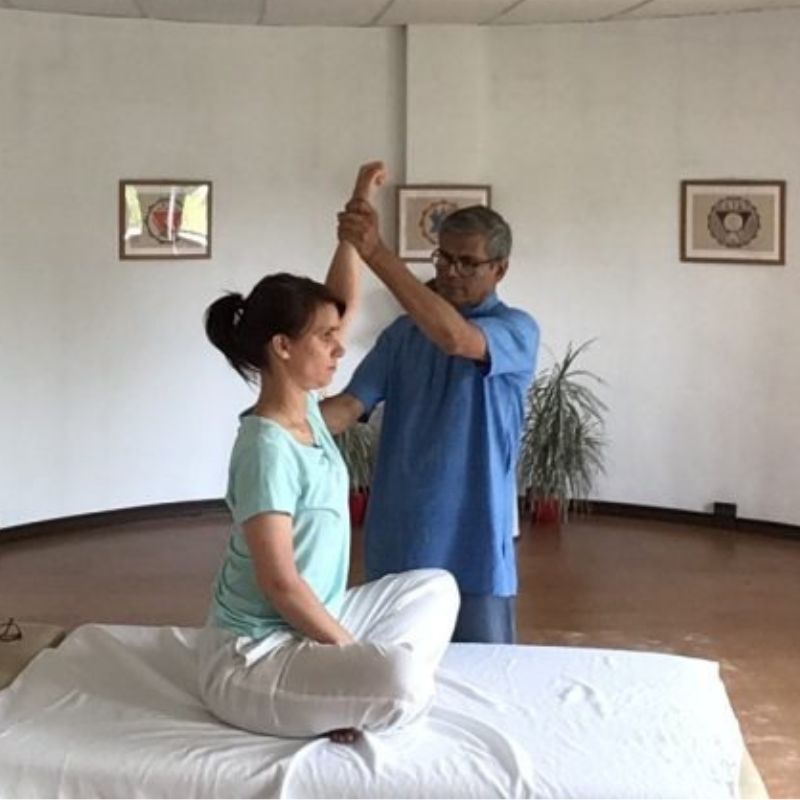
  • Consultation and case-taking
  • Yogic counselling (Vijnanopadesa)
  • Functional anatomy and physiology
  • Rehabilitation and psychosomatic conditions
  • Asana with therapeutic application
  • Pranayama for regulation of prana
  • Meditation and mantra
  • Shatkriya (cleansing practices)
  • Cyclic relaxation
  • Prana channeling practices

The teaching follows the traditional Indian gurukula structure. Students live in the ashram and follow a disciplined schedule designed to help them experience the principles of yoga therapy directly. Everyone must be physically and mentally prepared for a full training routine.

The course isn’t a personal retreat. Attendance in all sessions is required. If an unavoidable situation arises, students must inform the teaching team.

During these four weeks, participants are encouraged to practise Kriya Yoga as described by Sage Patanjali:

  • Tapas: disciplined effort
  • Ishwara Pranidhana: trust and surrender
  • Swadhyaya: reflection and self-study

These three qualities form the character of a sincere yoga therapy student.

The course prepares you to:

  • Conduct individual consultation sessions
  • Integrate therapeutic principles into regular yoga classes
  • Recognise factors influencing a student’s condition (disease combination, lifestyle, work environment, family background)
  • Apply classical and specialised yogic techniques safely

You don’t learn to “treat” diseases. You learn to guide each person according to their constitution, needs and circumstances.

Those who pass both written and practical assessments receive a certificate titled Yoga Therapy Instructor, recognised by Arsha Yoga and the Indian Yoga Association.

Dates & Prices

15th Feb – 14th Mar 26

Fee:

  • Dorm: USD1700 / INR 55000
  • Twin Share Room: USD 2635 / INR 144500
  • AC Twin Share Room: USD 3222 / INR 187000
  • Single Room: USD 3230 / INR187000
  • Single AC Room: USD 3825 / INR 229500

Daily Life in the Ashram

“Discipline is the bridge between goals and accomplishment.” Swami Sivananda

Begin the day in quiet, before the distractions of the world set in. Rising with nature sets a tone of clarity and balance.

A peaceful start to the day. We sit together in silence, chant uplifting mantras, and listen to readings or talks on yogic wisdom.
(Not religious. It’s a universal practice of focus, reflection, and inner connection.)

A light, warm cup to gently awaken the system.

Practice guided breathing (Pranayama), sun salutation and the 12 classical postures (asanas). Build strength, flexibility, and confidence at your own pace. In this session teachers will introduce and demonstrate postures.

A freshly cooked, vegetarian South Indian meal made with seasonal, local ingredients—simple, nourishing, and deeply satisfying.

A short, mindful activity like helping in the kitchen or garden. It’s not work—it’s a chance to connect, contribute, and reset your relationship with action.

Light and wholesome vegetarian fare to wind down the day.

Evening meditation and chanting, followed by a talk, cultural programme, or spiritual film. A calm close to a meaningful day.

The Ashram rests early. Silence and rest help integrate the day’s experience and support deep healing.

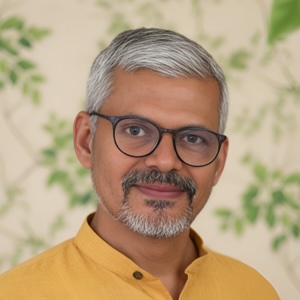
Acharya Harilal

Faculty of Samagra Yoga Chikitsa

Founder and Director of Arsha Yoga Gurukulam Charitable Trust

Harilal is an experienced Yoga Acharya with deep expertise in Comprehensive Yoga Healing, Yoga Psychology, and Vedantic studies. A long-time practitioner and teacher, he brings clarity, compassion, and a grounded approach to yogic healing and self-transformation.

Meera Karanath

Faculty of Samagra Yoga Chikitsa

Co-founder of Arsha Yoga Gurukulam Charitable Trust

Meera is a Yoga Healing Instructor and Vedic Chanting Teacher devoted to and women’s spirituality. Her teaching blends precision with warmth, guiding students to integrate yogic knowledge into daily life and personal growth.

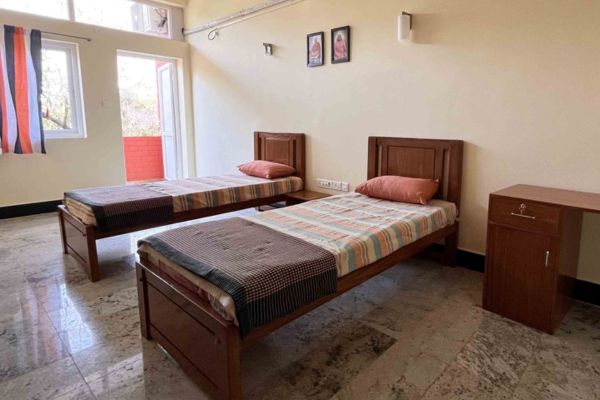
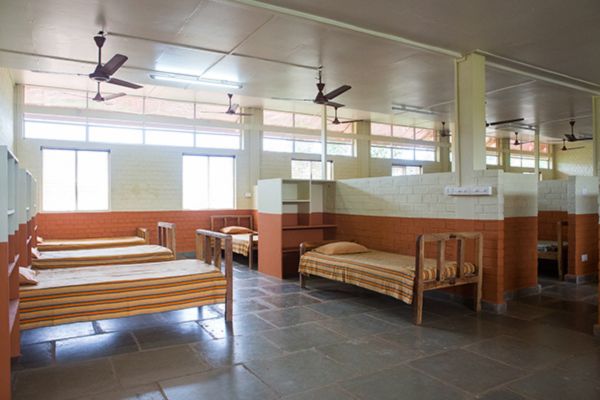
Accommodation

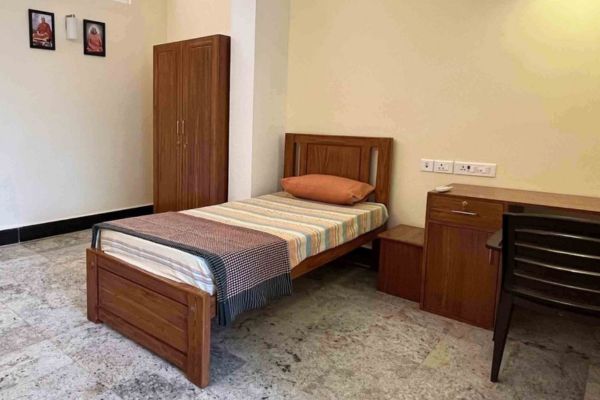
The Ashram offers five simple and functional types of accommodation.
Please note:

  • For all accommodation a mosquito net is provided.
  • Couples are not permitted to share twin rooms during the course.

Frequently Asked Questions

Yes. The Samagra Yoga Chikitsa Course welcomes yoga teachers from any lineage who have completed a 200-hour TTC. The training builds upon your existing knowledge and refines your understanding of yoga as a healing tool.

No. This is not a medical or therapy course. It is a yoga-based programme focused on applying classical yogic principles to restore balance and well-being in body and mind.

Students from any yoga school may apply. A previous TTC is required, but the lineage doesn’t matter.
This course suits:

  • Yoga teachers seeking therapeutic depth
  • Practitioners interested in one-to-one work
  • Individuals wanting a structured approach to holistic health
  • Students preparing for more advanced yoga therapy training

You must be willing to follow the full residential schedule, participate in karma yoga, and engage in both practice and study.

The day begins at 5:30 a.m. and ends at 10:00 p.m. It includes satsang, asana and pranayama, karma yoga, lectures, and reflection time. Fridays are usually free days.

Yes. The fee includes simple accommodation, two vegetarian meals, and evening tea. It also covers all classes, course materials, and access to ashram facilities.

Yes. You may choose from dormitory, twin-share, or single rooms, depending on availability. AC options are limited and confirmed on a first-come basis.

All classes are conducted in English. A basic understanding of spoken English is required to follow lectures and group discussions.

Cancellations are accepted via email. Refunds follow the Ashram’s official policy, with deductions based on the timing of cancellation. Overseas refunds may take longer to process.

Yes. Graduates receive a certification from Sivananda Yoga Vedanta Dhanwantari Ashram, internationally recognised for the study of yoga and its healing applications.

Explore More

Advanced Teachers’ Training Course

The 300-hour Advanced TTC is a natural step to broaden your teaching skills and deepen your practice through intensive Asana and Pranayama.